
There is a predictable pattern in how wealth moves through real estate markets. Capital concentrates in a handful of cities until land costs, congestion, and diminishing returns force investors to look outward. India is living through exactly that shift right now, and Jaipur is one of the clearest beneficiaries.
This is not speculative. The data, the infrastructure pipeline, and the on-the-ground buyer activity all point in the same direction: properties in Jaipur, particularly standalone villas in Jaipur, are moving from an emerging opportunity to an established investment category.
What follows is an analyst’s assessment of why this is happening, which forces will sustain it, and what a serious investor should understand before making a decision.
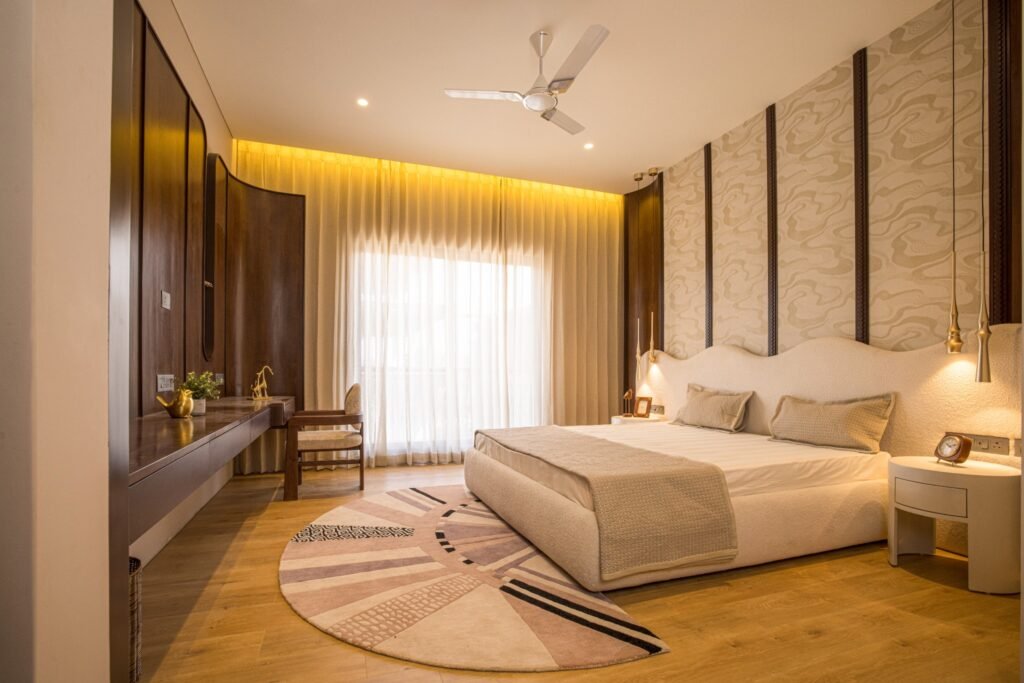
Delhi-NCR and Mumbai have delivered extraordinary returns to real estate investors, but that era of easy alpha is largely over. Average residential prices in Gurugram’s premium corridors have already crossed ₹15,000–₹25,000 per sq.ft. The yield compression at those price levels, combined with holding costs and liquidity constraints, has materially reduced the risk-adjusted return profile.
Smart capital does not stop working, it relocates. And the destination that consistently appears at the top of institutional and HNI radar screens is Rajasthan’s capital.
The Delhi–Mumbai Industrial Corridor (DMIC) passes through Rajasthan, with Jaipur positioned as one of its anchor nodes. DMIC-aligned development creates a reliable chain reaction: industrial investment attracts employment, employment drives housing demand, and housing demand in a supply-constrained premium market means sustained appreciation.
This is not a theory, it is the same playbook that transformed Pune (proximity to Mumbai industrial zones) and Hyderabad (pharma and IT corridors in Cyberabad) into premium real estate markets over the last 15 years. Jaipur is at the beginning of that arc, not the end of it.
Jaipur sits approximately 270 km from New Delhi. With the Delhi–Mumbai Expressway now operationally reducing effective travel time, the city has entered a commutable radius for senior professionals, weekend homeowners, and business families who want Delhi-adjacent lifestyle without Delhi-level real estate costs.
This geographic dividend is a structural advantage, one that does not depreciate over time and is not easily replicated by other cities in the region.
ANALYST NOTE: Jaipur’s residential land values are currently 60–75% below comparable micro-markets in Gurugram. The gap will narrow. It always does when infrastructure investment crosses a critical threshold. The question is not whether to be early, it is whether you can afford to be late.
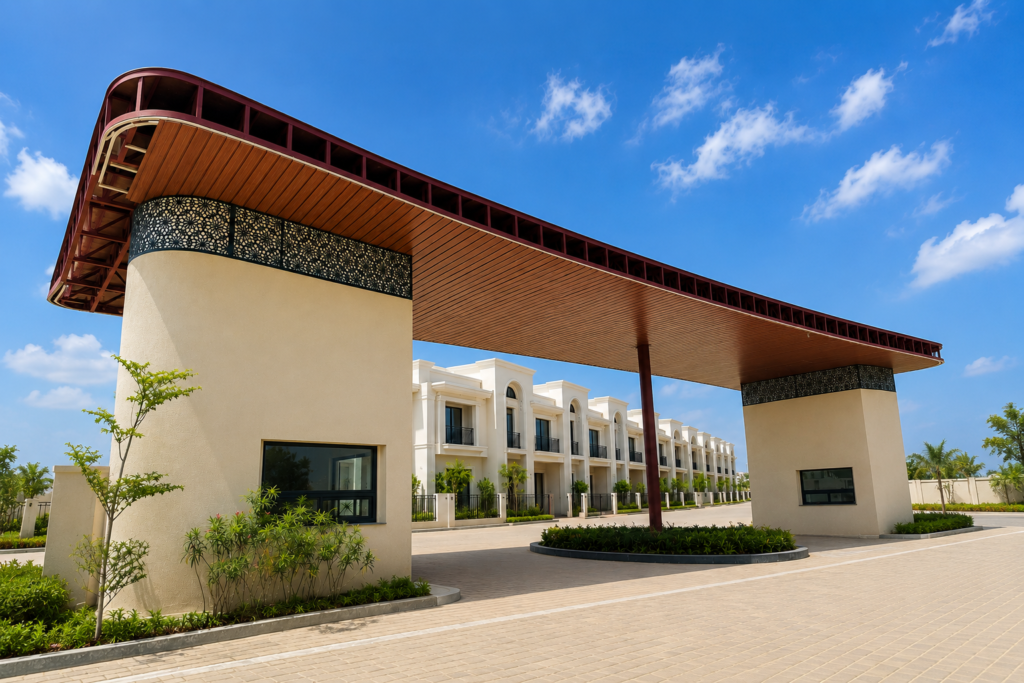
The shift from apartment ownership to villa ownership among HNI buyers is not a lifestyle trend. It is a rational investment decision driven by asset structure. Understanding the distinction matters for anyone evaluating properties in Jaipur at a serious level.
An apartment buyer owns a undivided share of land, typically expressed as a fraction of the total plot area divided across all units. A villa buyer, by contrast, owns a defined, titled land parcel beneath the structure. As urban land values appreciate over time, the villa buyer captures that appreciation directly.
Historically, land in expanding Indian cities appreciates at 1.5 to 2.5 times the rate of constructed inventory. This means the total return profile of a villa, combining structure appreciation with land value growth, systematically outperforms apartments over 7-to-10-year holding periods.
Every apartment tower adds 100–400 units to inventory. A well-planned villa community adds 30–80 units at most. Low-density design is, by definition, a supply constraint, and in real estate, constrained supply combined with rising demand produces one outcome: price appreciation.
The scarcity of truly well-planned, low-density luxury villas in Jaipur within established gated communities is itself a protective moat around existing asset values. It cannot be easily replicated, and that irreplicability is an investor’s best friend.
Villa ownership allows structural modification, extension, and personalisation in ways that apartment co-ownership structures prohibit. For buyers who plan to hold a property for 10–15 years, the ability to invest in upgrades, and capture that investment in resale value, is a material financial advantage.
The investment case for villas in Jaipur for sale in the premium segment rests on four reinforcing pillars. Each is worth examining independently, and collectively, they explain why serious investors are not waiting for more data.
Premium residential properties in Jaipur’s growth corridors have delivered annual capital appreciation in the range of 8–14% over the last four years, depending on location and configuration. While past performance is not a guarantee, the infrastructure pipeline that drove this appreciation, road widening, metro planning, expressway connectivity, is not complete. It is accelerating.
The Goner Road widening from 60 to 300 feet, the signal-free Mahal Road upgrade, and the planned elevated road links are each appreciating catalysts in their own right. As they complete in phases through 2026–2028, the surrounding residential values will reprice accordingly.
Jaipur’s corporate maturation is creating a rental demand segment that did not exist five years ago: senior executive and expatriate tenants seeking furnished villa accommodation within gated communities. These tenants prioritise privacy, security, and proximity to industrial zones, and they pay for it.
Well-positioned luxury villas in Jaipur in premium gated communities are generating net rental yields of 3.5–4.8% annually, a number that compares favourably to prime Mumbai (1.8–2.5%) or Bengaluru (2.5–3.2%) at comparable entry prices. The yield advantage, combined with a lower capital entry point, makes the total return profile genuinely compelling.
There is a category of asset in every market where demand is partially driven by exclusivity itself, where scarcity enhances desirability in a self-reinforcing cycle. Limited-inventory luxury villas in Jaipur within established gated communities occupy exactly this position.
Jaipur’s business community, senior government officials, and returning NRI families are increasingly purchasing not just for residence but for social positioning, which creates a floor on resale values that purely financial analysis tends to underestimate.
INVESTMENT SNAPSHOT, TIMES ESTATE: RERA Reg. No. RAJ/P/2026/3787 | Jagatpura, Vijay Marg, Jaipur | Tattva 4 BHK Villas from ₹2.99 Cr (2,892–3,025 sq.ft) | Kasbah 5 BHK Bungalows from ₹4 Cr (3,764–3,808 sq.ft)

Jaipur is not a monolithic market. Different corridors carry different risk-return profiles, and the difference between a well-timed purchase in the right micro-market and a poorly-timed one in the wrong location can be measured in crores over a 10-year hold. Here is an honest micro-market analysis.
Jagatpura is where the confluence of present connectivity and future infrastructure creates the clearest investment case. The corridor already offers direct access via Vivek Marg, 2.5 km ring road proximity, and closeness to Sitapura and Ramchandrapura industrial zones, the twin employment engines driving residential demand.
Layered on top: the Goner Road expansion to 300 feet (active construction), the Mahal Road signal-free upgrade (progressing rapidly toward September 2026 completion), and World Street / Pink Walk, one of Jaipur’s largest commercial retail destinations, within a 5–7 minute drive.
Times Estate is located here, a RERA-registered low-density gated community on Vijay Marg, with 30-metre green belt access along the Dravyavati River and a thoughtfully designed masterplan built around the investor profile that understands what this location will be worth in 2030.
The Tonk Road corridor, running from Durgapura through Sitapura toward Jaipur International Airport, is Jaipur’s most commercially active arterial. Airport proximity (sub-30-minute access for most of the corridor) makes it particularly attractive for business owners, frequent flyers, and NRI buyers who value departure convenience.
Premium independent floors and villa plots here command a 10–15% price premium over comparable properties further from the airport axis, a premium that has proven sticky through multiple market cycles.
Ajmer Road’s proximity to the Mahindra World City SEZ and expanding IT campuses makes it a structurally sound investment for buyers with a 5–8 year horizon. The corridor is still in active development, which means entry prices remain accessible, but they are rising. Buyers who entered 3 years ago have already seen meaningful appreciation.
For investors looking at villas in Jaipur for sale in the sub-₹2.5 crore range with higher upside potential, Ajmer Road’s peripheral micro-markets offer the most asymmetric return profile in the city today.
Sirsi Road is generating genuine residential interest as road infrastructure improvements improve its connectivity to the Ring Road and beyond. Entry prices remain the most accessible of Jaipur’s growth corridors, making it suitable for first-generation HNI buyers building their property portfolio alongside more established investors.
Beyond location, the quality of the community determines the quality of the investment. These are the non-negotiables that experienced buyers evaluate before committing capital to luxury villas in Jaipur.
Real estate investment windows are rarely announced. They are recognised, usually in hindsight, by the buyers who missed them. Jaipur’s premium villa market is currently in the phase where the fundamentals are visible to anyone willing to look, but the prices have not yet fully reflected them.
The infrastructure is under construction, not in planning. The demand is rising, not projected. The supply of quality villa communities remains constrained, and adding a well-planned low-density development takes years. These three conditions, confirmed infrastructure, rising demand, constrained supply, represent exactly the entry scenario that generates above-market long-term returns.
For HNI buyers and NRI investors evaluating properties in Jaipur seriously, the relevant question is not whether Jaipur will deliver returns. It is whether the specific community you choose to invest in, its location, its planning, its regulatory standing, its management, is positioned to capture those returns for you.
Times Estate, RERA registered, low-density, Dravyavati River-adjacent, positioned in Jagatpura at the intersection of Jaipur’s most active infrastructure corridors, is designed with exactly that question in mind.